離開
離開 進入
進入《TAIPEI TIMES》Manufacturing ends 2025 on a high
2026/01/03 03:00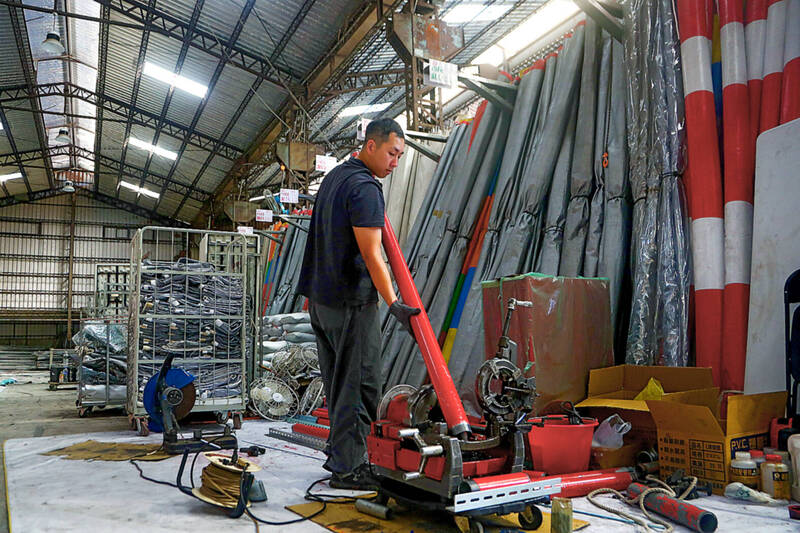
A worker operates a machine at a factory in New Taipei City’s Beitou District on Aug. 25 last year. Photo: CNA
DUAL-ENGINE GROWTH:CIER’s president said ‘the pickup reflects a broad-based recovery in manufacturing activity,’ driven by Taiwan’s role in the AI supply chain
By Crystal Hsu / Staff reporter
Taiwan’s manufacturing sector wrapped up last year with its strongest expansion in more than 18 months, buoyed by a surge in production of next-generation artificial intelligence (AI) hardware and demand for customized AI chips from global cloud service providers.
The purchasing managers’ index (PMI) for Taiwan’s manufacturing sector rose 3.9 points last month to 55.3, the third straight month of expansion and the fastest pace since June 2024, the Chung-Hua Institution for Economic Research (CIER, 中經院) said yesterday.
A reading above 50 indicates expansion.
“The pickup reflects a broad-based recovery in manufacturing activity, driven primarily by Taiwan’s central role in the global AI supply chain,” CIER president Lien Hsien-ming (連賢明) told a news conference in Taipei.
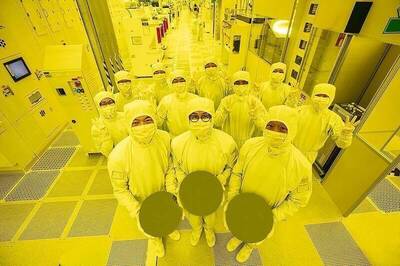
The transition of next-generation AI computing products into mass production and shipment, coupled with surging demand for customized AI chips from cloud operators, has pushed Taiwan’s AI supply chain into what Lien described as a “dual-engine growth phase.”
Taiwan plays a pivotal role in global AI hardware manufacturing, supplying an estimated 80 to 90 percent of the world’s AI servers, CIER data showed.
Among the PMI’s five subindices, new orders, production and employment all showed positive cyclical movements last month. Supplier delivery times lengthened further, while inventories returned to growth, underscoring both rising demand and tightening supply conditions, it said.
The ramp-up in AI hardware production has lifted demand for advanced wafers, substrates, packaging, power management components and memory chips, CIER researcher Chen Shin-hui (陳馨蕙) said.
At the same time, shortages of conventional memory chips and rising prices have prompted customers to accelerate shipments of finished products, further boosting demand across the electronics supply chain, Chen said.
Reflecting the strain on capacity, the backlog index for electronics firms jumped 11 points to 57.8, the fastest expansion since April 2022, the monthly survey found.
Supplier delivery times in the electronics and optical industries rose to 61.8, the biggest increase since June 2022, while the raw material prices index surged to 72.1, the steepest rise since May 2022, highlighting intensifying cost pressures.
Forward-looking sentiment turned positive for the first time in eight months, the survey showed.
The six-month business outlook index climbed to 51, signaling renewed optimism among manufacturers after confidence had been weighed down since April by concerns over potential US tariff measures.
However, firms in food and textiles, basic raw materials, and machinery equipment remain more cautious, pointing to a prolonged, uneven expansion.
The non-manufacturing index edged down to 54.6 last month from 55.8 a month earlier, but stayed firmly in expansion territory, CIER said.
新聞來源:TAIPEI TIMES