離開
離開 進入
進入《TAIPEI TIMES》Taiwan foreign exchange reserves top US$600 billion mark for first time
2025/10/08 03:00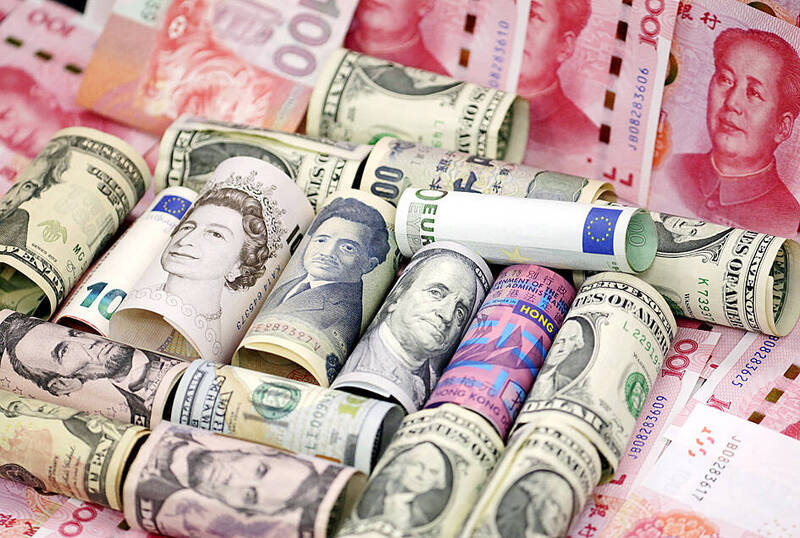
Euro, Hong Kong dollar, US dollar, Japanese yen, British pound and Chinese 100-yuan banknotes are seen in a picture illustration on Jan. 21, 2016. PhotoL: Reuters
Staff writer, with CNA
Taiwan’s foreign exchange reserves hit a record high at the end of last month, surpassing the US$600 billion mark for the first time, the central bank said yesterday.
Last month, the country’s foreign exchange reserves rose US$5.51 billion from a month earlier to reach US$602.94 billion due to an increase in returns from the central bank’s portfolio management, the movement of other foreign currencies in the portfolio against the US dollar and the bank’s efforts to smooth the volatility of the New Taiwan dollar.
Department of Foreign Exchange Director-General Eugene Tsai (蔡炯民)said a rate cut cycle launched by the US Federal Reserve and continued enthusiasm over artificial intelligence development led share prices in Taiwan to new highs and pushed up the NT dollar in some trading sessions.
To stabilize the local foreign exchange market, the central bank stepped in to buy greenbacks and sell the NT dollar to slow down the pace of the local currency’s appreciation, Tsai said.
The TAIEX soared 1,587.44 points or 6.55 percent last month, while the NT dollar appreciated 0.44 percent against the US dollar in the month. Analysts said without the central bank’s intervention, the local currency would have moved higher.
Due to the strong showing of the local stock market and growing market value, foreign investors held US$1.04 trillion in Taiwan-listed stocks, bonds and NT dollar-denominated deposits last month, a new high and up from US$951.1 billion in August.
These holdings equaled 172 percent of Taiwan’s total foreign exchange reserves last month, up from 159 percent in August.
When asked whether Taiwan will use its huge foreign exchange reserves as a bargaining chip during tariff talks with the US in terms of foreign exchange rate movement acceptable to Washington or Taipei’s potential investments in the US market, Tsai said the central bank is not part of Taiwan’s negotiation team.
“Taiwan’s foreign exchange reserves and the ongoing tariff talks with the US are two separate issues,” he said.
Tsai emphasized the central bank has built a communications channel with the US Department of the Treasury as it comes to its foreign exchange policies.
The central bank has said the guidance the US treasury department gave in its latest semi-annual currency report in June was consistent with Taiwan’s foreign exchange policies. In the report, Taiwan stayed on the currency watch list with eight other economies — China, Japan, Korea, Singapore, Vietnam, Germany, Ireland and Switzerland.
Taiwan has built up about NT$3 trillion (US$98.36 billion) in overseas assets, including NT$1.5 trillion in private hands, and enjoys a sizable currency account surplus of more than US$100 billion, the country has no problem in liquidity, Tsai said.
The huge overseas assets held by the private sector can be used for investments abroad, he added.
The central bank also reiterated its commitment to maintaining sufficient foreign reserves to safeguard Taiwan’s financial stability and cushion against sudden capital outflows.
新聞來源:TAIPEI TIMES