離開
離開 進入
進入《TAIPEI TIMES》 Supreme Court upholds jail term for ex-NSB agent
2026/03/14 03:00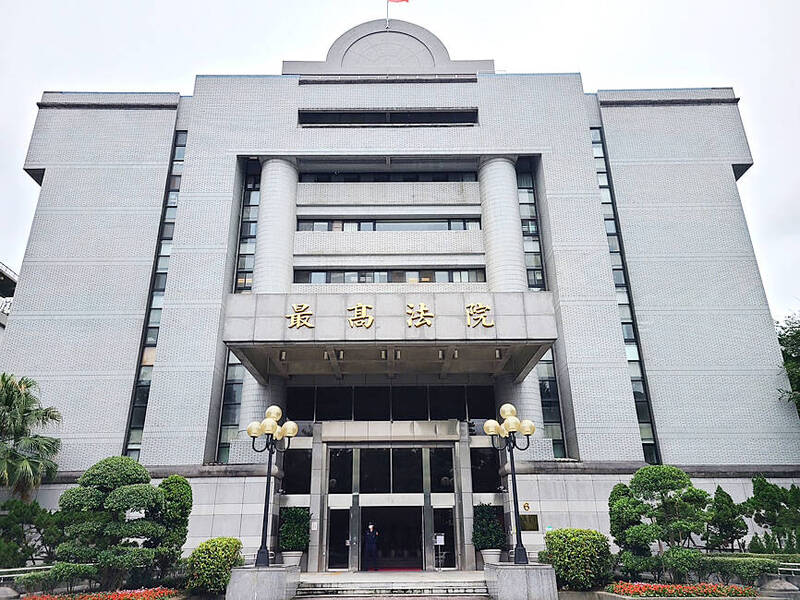
The Supreme Court in Taipei is pictured in an undated photograph. Photo: CNA
By Chang Wen-chuan and Jake Chung / Staff reporter, with staff writer
The Supreme Court yesterday upheld a four-year prison sentence for a retired National Security Bureau (NSB) agent for contravening the National Intelligence Services Act (國家情報工作法) by seeking employment in China using classified information.
The ruling is final and cannot be appealed.
According to a court notice, agent Peng Shun-fu (彭順富) joined the bureau in 1995 and worked on electronic password cracking, which classified him as an intelligence officer under the act.
Peng’s work was classified by the NSB director-general and, under the Classified National Security Information Protection Act (國家機密保護法), was sealed indefinitely and prohibited from disclosure.
After being placed on leave in 2006, Peng did not seek reinstatement.
In May 2018, when applying for a teaching position on an academic talent recruitment Web site run by the Chinese Ministry of Education, he disclosed in his resume his previous employment with the NSB, and described the research and results from his work there.
The application included information on intelligence sources, communication channels, organizational structures and the identities of sources, the court notice said.
The Taoyuan District Prosecutors’ Office launched an investigation after receiving a tip-off and subsequently indicted Peng.
The Taoyuan District Court sentenced Peng to four years in prison, saying that the offenses were committed before amendments to the National Intelligence Services Act that introduced harsher penalties.
Both the defendant and prosecutors appealed, with Peng maintaining his innocence and prosecutors arguing that the sentence was too lenient.
The second-instance ruling found that Peng had shown no remorse and noted that he had previously breached the National Intelligence Services Act.
As an NSB officer, Peng should have understood the importance of intelligence work and the duty of loyalty to the state, the court said.
By disclosing his work history and research to obtain employment in China, Peng had ignored years of state training and support expected of military and intelligence personnel, the Supreme Court said, upholding the four-year prison sentence.
新聞來源:TAIPEI TIMES