離開
離開 進入
進入《TAIPEI TIMES》 Largest arms deal awaits Trump nod
2026/03/14 03:00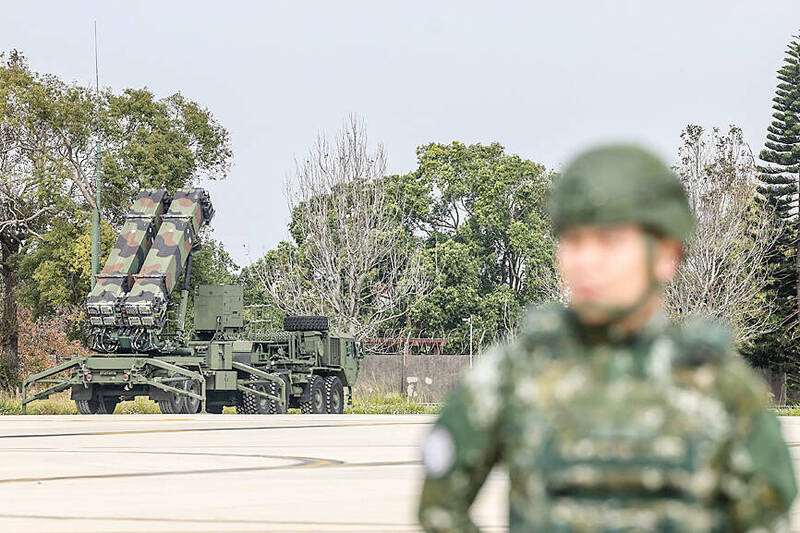
A PAC-3 Patriot missile system is pictured at a combat readiness exercise at Ching Chuan Kang Air Base in Taichung on Jan. 8 last year. Photo: Cheng I-hwa, AFP
‘CONFIDENCE IN TRUMP’:The expected approval of the arms package signals the US’ continued security commitment ahead of a US-China meeting later this month
By Michael Martina, Trevor Hunnicutt, Yimou Lee and Ben Blanchard / Reuters, WASHINGTON and TAIPEI
A major US arms package for Taiwan that includes advanced interceptor missiles is ready for US President Donald Trump’s approval and could be signed after his trip to China this month, sources briefed on the discussions said.
With a price tag of about US$14 billion, the arms deal would be the largest ever for Taiwan.
Sources familiar with the administration’s thinking said the deal is being held under wraps ahead of Trump’s planned March 31 to April 2 trip to Beijing to meet with Chinese President Xi Jinping (習近平), but could be announced after he returns.
Xi told Trump last month that arms sales to Taiwan must be handled with “prudence.”
Trump’s moves to secure a favorable trade deal with China have raised concerns among some China watchers that he could curb US military support for Taiwan, but the likely arms approval suggests that the administration plans to maintain or even increase support.
The package largely consists of PAC-3 and NASAMS air defense missiles, one of the sources said.
“As soon as the president gives the thumbs up, those are ready to be officially announced. Everything is done,” said the person, who like others spoke on condition of anonymity given the sensitivity of the matter.
Another US$6 billion in “asymmetric” defense capabilities is also awaiting approval and could be announced in linked or subsequent packages, the source added.
The source declined to specify what those capabilities are.
Trump’s National Security Strategy issued late last year says that deterring conflict over Taiwan is a priority for Washington, “ideally by preserving military overmatch.”
However, Trump’s comments, including a remark made last month to journalists that he was “talking” to Xi about Taiwanese arms sales, have stirred speculation that he could scale back the long-standing US practice of providing Taiwan with the means to defend itself, which is written into US law.
Nonetheless, Trump’s arms sales approvals to the nation in his second term have already surpassed the amount approved by his predecessor, former US president Joe Biden, over four years, including an US$11 billion package in December last year that greenlighted various missiles, drones, artillery and aircraft parts.
Analysts say US administrations going back decades have timed weapons approvals for Taiwan around sensitive political engagements with Beijing.
The Chinese Ministry of Foreign Affairs said in a statement that the government’s “opposition to US arms sales to China’s Taiwan region is consistent and unequivocal.”
In response to questions to the White House, a senior US official confirmed more weapons approvals were in the works.
“Arms sales are working their way through the process. There is no change to our policy with respect to Taiwan,” the official said.
Two sources in Taiwan familiar with the matter said that Washington has repeatedly assured them of its support, but the upcoming summit has been a source of uncertainty.
Beijing is seeking to delay US arms sales to Taiwan and has been trying to create a better atmosphere ahead of the summit, including by toning down military pressure on the nation, another source in Taiwan familiar with the matter said.
“We have confidence in Trump, though. Beijing has underestimated the strategic vision of the White House,” the source said.
The Ministry of National Defense said that its arms procurement projects have completed “preliminary coordination” with the US, and the US Defense Security Cooperation Agency has provided information on items to be purchased and delivery schedules.
The defense ministry in January said that an arms deal with the US covering four items was in the offing, but said it could not give details before they were provided to the US Congress, the usual process for approval of such sales.
The US Department of State has said it supports increased defense spending by Taiwan.
American Institute in Taiwan Director Raymond Greene in January said that the US was “fully committed to delivering critical systems as quickly as possible.”
新聞來源:TAIPEI TIMES