離開
離開 進入
進入《TAIPEI TIMES》Ban on TikTok access at schools mulled
2025/10/16 03:00
Minister of Digital Affairs Lin Yi-jing speaks at a meeting of the legislature’s Transportation Committee in Taipei yesterday. Photo: Liao Chen-hui, Taipei Times
By Shelley Shan / Staff reporter
The government is considering restricting access to TikTok for elementary and junior-high-school students by blocking it on campus Wi-Fi networks, the Ministry of Digital Affairs said yesterday.
Minister of Digital Affairs Lin Yi-jing (林宜敬) briefed lawmakers at a meeting of the legislature’s Transportation Committee for the first time since taking office last month.
He was asked whether the government would impose a comprehensive TikTok ban in grade schools, with some legislators saying that content on the platform could harm the physical and mental health of young students.
There are three major concerns regarding the use of TikTok: where the platform stores user data, whether the company is controlled by Chinese investors and the harm its content might pose for young students, Lin said.
The US government is trying to address the first two issues with TikTok, he said.
“We are working closely with the Ministry of Education to address the issue about protecting children from potential harm associated with content on TikTok,” he said. “Currently, TikTok does not permit children aged 12 or under to create an account, while users aged 13 to 15 are granted only limited access to the platform.”
“We are leaning toward limiting student access to TikTok by blocking it on school Wi-Fi networks,” he said. “We would discuss this matter with the Ministry of Education and the Ministry of Health and Welfare. Hopefully, we would have some ideas how the measure should proceed by the end of this year.”
Schools would not be asked to check students’ mobile phones, Lin said, adding that whether TikTok should be completely banned requires a public consensus, as it is a freedom of speech issue.
Chinese Nationalist Party (KMT) Legislator Hung Meng-kai (洪孟楷) said that the government should compile a list of applications that might be detrimental to children, rather than just TikTok.
TikTok and Douyin (抖音) are sister apps owned by Chinese Internet company ByteDance (字節跳動), with TikTok serving international markets and Douyin operating exclusively in China.
Separately, the issue of whether Douyin should be banned on school campuses came under scrutiny at a meeting of the legislature’s Education and Culture Committee.
Democratic Progressive Party Legislator Chen Hsiu-pao (陳秀寶) said that deaths and injuries among young people taking on dangerous and deadly challenges on Douyin have been reported worldwide.
Despite the risks, student groups say that rather than banning Douyin, the government should teach literacy of potentially harmful content, Chen said.
KMT Legislator Ko Ju-chun (葛如鈞) said that Facebook and Instagram have more fraud and disinformation than Douyin and Xiahongshu (小紅書, or RedNote), adding that banning students from accessing social media would trigger a backlash and hamper innovation.
Minister of Education Cheng Ying-yao (鄭英耀) said that the Executive Yuan’s Guidelines for Government Agencies on the Restricted Use of Products that Threaten National Cybersecurity (各機關對危害國家資通安全產品限制使用原則) stipulate that elementary and junior high schools must not have Chinese-made hardware or software, and content from Douyin and platforms that have little relevance to learning have been eliminated from the nation’s academic network.
Aside from setting clear regulations on student access to social media on campuses, Cheng said that the ministry would ensure students are properly educated to discern whether online information is accurate and genuine.
新聞來源:TAIPEI TIMES
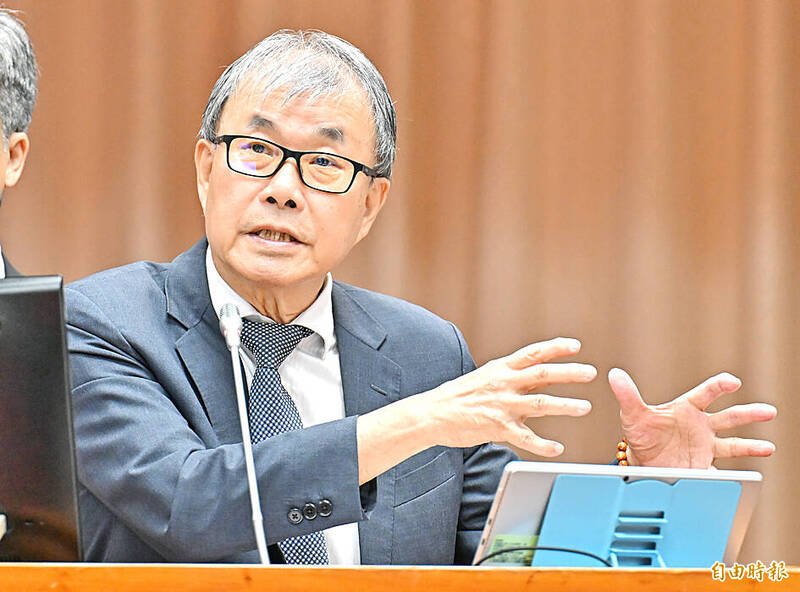
Minister of Education Cheng Ying-yao speaks at a meeting of the legislature’s Education and Culture Committee in Taipei yesterday. Photo: Chen Chih-chu, Taipei Times