離開
 進入
《TAIPEI TIMES》 Referendum still leaves issues remaining: groups
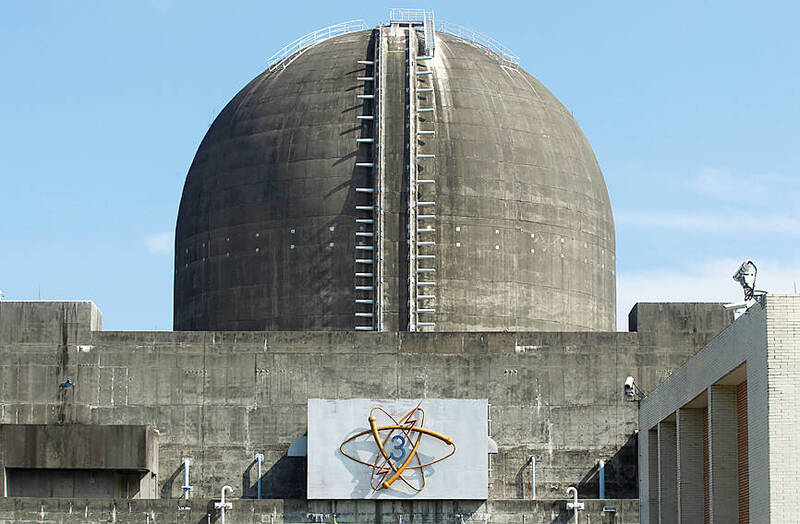
The Ma-anshan Nuclear Power Plant in Pingtung County is pictured in an undated photograph. Photo: Wally Santana, AP
JOINT RESPONSIBILITY: The ruling and opposition parties should cooperate in tackling the issue of selecting nuclear waste disposal sites, a nuclear abolition group said
By Liao Chia-ning and Esme Yeh / Staff reporters
The results of Saturday’s referendum on nuclear power have prompted calls for a nuclear waste disposal bill, while business groups urged the government to address the rising demand for power.
The referendum, held alongside the nine-in-one local elections, passed with more than 7.43 million votes in favor of reinstating nuclear power.
The National Nuclear Abolition Action Platform (NNAAP) said in a news release that the passage of the referendum does not mean that dilapidated nuclear power plants pose no safety risks, or that the public has reached a consensus on restarting the Ma-anshan Nuclear Power Plant in Pingtung County’s Hengchun Township (恆春).
Nuclear power has been continuously touted as a panacea for energy issues in referendums, it said.
Pro-nuclear advocates argue that reinstating nuclear energy could solve issues such as the national energy shortage, rising electricity costs, carbon and air pollution, high power demand from artificial intelligence-related sectors, or geopolitical import risks, but refrain from addressing the limitations and cost of nuclear power, the NNAAP said.
Huge expenditure would be required if the nation is to restart run-down nuclear plants, build new facilities or develop smaller modular reactors — which lack a commercialization track record — it said, adding that uncertainties also exist in construction timeframes.
A referendum can reflect public opinion, but it cannot erase safety concerns, the NNAAP said.
While the Act on Sites for Establishment of Low Level Radioactive Waste Final Disposal Facility (低放射性廢棄物最終處置設施場址設置條例) was promulgated 20 years ago, it is yet to allocate a disposal site for low and high-level nuclear waste, it said.
The government had planned to propose a draft bill addressing high-level waste disposal site selection by the end of last year, but has so far failed to send such a bill to the legislature, the NNAAP said.
Disposal sites must be selected, assessed and approved by 2028, Taiwan Power Co’s nuclear waste disposal plan shows.
The ruling and opposition parties should jointly take on the legislative responsibility to fulfill intergenerational justice, the NNAAP said.
“No more nuclear waste should be generated until final nuclear waste disposal sites are decided,” it said.
The NNAAP also called on the legislature not to use the referendum results as a reason to prioritize the benefits of nuclear power with substantial supplementary budgets, while shifting the costs and risks onto the public, and hampering the energy transition by cutting budgets for renewables.
Nuclear power is not indispensable to Taiwan’s economic development, it said.
Taiwan’s economy continued to grow with a stable electricity supply after the nation became nuclear-free in May last year, while renewable energy development continued, and improvements were made in emissions and air pollution, it added.
The Executive Yuan and the Ministry of Economic Affairs on Saturday said that they respect the referendum results and would continue to promote the energy transition.
The principles of ensuring nuclear safety, solving the issue of waste disposal and building a social consensus would still be upheld in tackling nuclear power issues, they said.
Seperately, the Chinese National Association of Industry and Commerce, Taiwan yesterday said that businesses expect the government to “go with public opinion.”
Central and local governments should enter bipartisan cooperation on obtaining land for industrial use and developing water and power utilities as well as major infrastructure, the association said.
This would help accelerate material investments in domestic industries and boost international competitiveness, it said, calling on the ruling and opposition parties to work together in building a reliable investment and business environment.
The referendum garnered the majority of public support, showing that the public and industry are highly concerned about a stable power supply, reasonable energy prices and the low-carbon transition, the association said.
The executive and legislative branches should establish dialogue to refine relevant regulations and adjust the nation’s energy portfolio, thereby building a stable power supply system to meet the demand from AI expansion and high-tech manufacturing, it said.
新聞來源:TAIPEI TIMES