離開
 進入
《TAIPEI TIMES》 Legislative Yuan stiffens penalties on drug driving

Opposition lawmakers hold signs to celebrate the passage of amendments to the Criminal Code significantly increasing penalties for drug-impaired driving at the Legislative Yuan in Taipei yesterday. Photo: Wang Yi-sung, Taipei Times
By Chen Ying-chieh / Staff reporter, with CNA
The Legislative Yuan yesterday passed amendments to the Criminal Code significantly increasing penalties for drug-impaired driving, including raising the maximum prison term from three to five years and allowing capital punishment for repeat offenders who cause death within 10 years.
The amendments passed with support from opposition lawmakers, who hold a majority in the legislature, following a joint motion by the Chinese Nationalist Party (KMT) and Taiwan People’s Party (TPP) to separate penalties for drug-impaired driving from those for drunk driving.
Previously, Article 185-3 of the Criminal Code covered penalties for driving under the influence of drugs, alcohol or other substances under a single provision. It did not provide for the death penalty.
Under the amended law, drug-impaired driving carries a maximum prison term of five years and a fine of up to NT$500,000 (US$15,395), up from a maximum of three years in prison and a fine of NT$300,000.
If the offense results in death, offenders face at least seven years in prison and a fine of up to NT$7 million.
If it causes serious injury, they face five to 12 years in prison and a fine of up to NT$5 million.
Repeat offenders who commit another drug-impaired driving offense resulting in death within 10 years of a previous conviction or deferred prosecution for a drug-driving offense face the death penalty, life imprisonment or at least 10 years in prison, along with a fine of up to NT$10 million.
Repeat offenders whose offenses result in serious injuries face at least seven years in prison and a fine of up to NT$7 million.
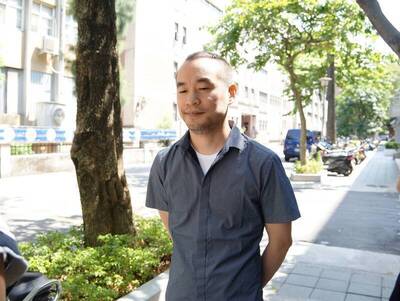
Before the bill’s passage, TPP caucus secretary-general Hung Yu-shiang (洪毓祥) held a news conference to explain why the party proposed the amendments.
The caucus has long advocated tougher penalties for drug-impaired driving, particularly for repeat offenders who cause fatal accidents, and wanted the amendments to include the death penalty, Hung said.
The amendments were intended to deter drug-impaired driving, not to seek retribution, he said.
Separately, Democratic Progressive Party caucus secretary-general Chuang Jui-hsiung (莊瑞雄) said the party supported a zero-tolerance approach to drug-impaired driving, including tougher prison terms and higher fines.
However, penalties should distinguish between intentional and negligent acts resulting in death, he said.
A zero-tolerance approach should not automatically entail the death penalty, despite what he described as its strong deterrent effect.
Meanwhile, a raft of stringent new penalties for driving under the influence of drugs are to take effect today, the Ministry of the Interior and the National Police Agency said.
In line with changes to the Road Traffic Management and Penalty Act (道路交通管理處罰條例), first-time offenders caught driving under the influence of drugs face a fine of NT$120,000 if they were riding a motorcycle or scooter, or NT$150,000 if they were driving a car.
Those who refuse a police drug test may be fined NT$270,000 for a first offense.
Authorities can confiscate any vehicle involved in a drug-driving incident or if the driver refused a test.
Driver’s license regulations have also been severely tightened.
Anyone caught driving under the influence of drugs would have their license revoked and be barred from retaking the test for three years.
The amendment also introduces “preventive revocation,” allowing authorities to revoke the licenses of confirmed drug users for two years.
Repeat offenders caught within a 10-year period, as well as those who cause injury or death while driving under the influence of drugs, would face a lifetime license ban.
Those seeking to reapply for a license after a suspension must first complete mandatory anti-drug driving education or addiction treatment programs.
The new rules also introduce joint liability for passengers, stipulating that anyone aged 18 or older who knowingly rides in a vehicle operated by a driver under the influence of drugs faces a fine of NT$6,000 to NT$15,000.
To facilitate enforcement of the new regulations, police nationwide have been equipped with rapid saliva test kits, the agency said.
新聞來源:TAIPEI TIMES