離開
離開 進入
進入《TAIPEI TIMES》Drone operators fined NT$16 million
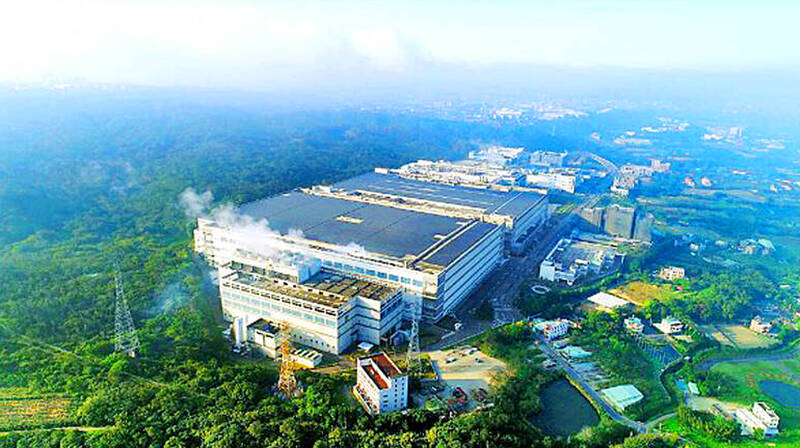
The Longtan Science Park in Taoyuan is pictured in an undated photograph. Photo courtesy of Taoyuan City Councilor Hsu Yu-shu
EYE IN THE SKY: Science parks need to protect against aerial photography, which could expose trade secrets, while a crash at a reservoir could contaminate water, experts said
By Huang Yi-ching and Sam Garcia / Staff reporter, with staff writer
Authorities fined drone operators a total of NT$16 million (US$505,849) in 72 cases last year and the first half of this year, with more than 80 percent of the contraventions occurring at airports, reservoirs and science parks, the Civil Aviation Administration (CAA) said.
YouTuber Chung Ming-hsuan (鍾明軒) was fined NT$330,000 for illegally operating a drone near the Ma-anshan Nuclear Power Plant in June and for failure to display a registration number on the aircraft.
Last month, the triggering of a drone-detection sensor in the controlled area surrounding Taiwan Taoyuan International Airport forced the north and south runways to suspend takeoffs and landings for 10 minutes, affecting nine flights.
The CAA fined drone operators in 47 cases last year and 25 in the first half of this year, the agency said.
Twenty-four of the fined infractions took place in airport restricted airspace, 19 at reservoirs and 15 in science parks, it said.
The remaining 14 cases occurred in other restricted areas, such as Taipei Main Station and power plants, it added.
Commercial aircraft travel at high speeds and low altitudes during takeoff and landing, and a drone being sucked into an engine or colliding with an aircraft could cause a major disaster, Chaoyang University of Technology Department of Aviation Technology director Lu Yen-liang (盧衍良) said yesterday.
Reservoirs and power plants are subject to air restrictions to prevent drones from crashing into and damaging equipment, contaminating water sources or causing secondary disasters, he said.
As centers of high-tech industry, science parks must guard against aerial photography to prevent trade secrets from being leaked, Lu said.
A drone crash at a science park could also damage sensitive equipment and injure workers, he added.
While enforcing no-fly zones at airports is a top priority because drone incursions can threaten flight safety, local government no-fly zones have fewer resources and depend more on public reports, meaning some contraventions might go undetected, former National Cheng Kung University Department of Transportation and Communication Management Science associate professor Melody Dai (戴佐敏) said.
Drones are prohibited in reservoirs and science parks, and flying them without approval can result in fines of NT$30,000 to NT$1.5 million under the Civil Aviation Act (民用航空法), and the drone would be confiscated in serious cases, CAA drone office executive secretary Keng Hua (耿驊) said.
People can download the Ministry of Transportation and Communications’ Drone Map app or go to the CAA’s drone management system to see maps of restricted airspace, Keng said.
As of the end of June, there were 36,066 valid drone licenses and 42,016 registered drones, CAA data showed.
One drone operator surnamed Chen (陳) said he checks the CAA’s official Web site before every flight to see whether drones are permitted in the area, but some operators might be unaware of the rules or take their chances and enter restricted airspace.
Notifications from government apps about restricted airspace might not be enough for beginners, who might accidently contravene regulations, drone operator Wu Ming-yang (吳明陽) said.
Retailers should put warning labels on drones and promote the regulations, he said.
Wu called for the legalization of drone flights during the 30 minutes before sunrise and after sunset so photographers can capture better footage.
新聞來源:TAIPEI TIMES