離開
離開 進入
進入《TAIPEI TIMES》NSB steps up anti-drug efforts

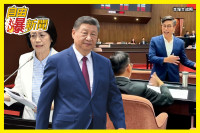
National Security Bureau Director-General Tsai Ming-yen, center, is pictured at the Legislative Yuan in an undated photograph. Photo: Taipei Times
CROSS-BORDER COOPERATION:The drug market has shifted towards smuggling emerging narcotics including mephedrone and ketamine, the security bureau said
By Fang Pin-chao / Staff reporter
Tech-driven intelligence efforts have been stepped up to combat emerging drug crimes, the National Security Bureau (NSB) said.
The bureau made the remarks in a written report submitted to lawmakers ahead of a Foreign Affairs and National Defense Committee meeting on Monday, at which officials from the bureau, the Ministry of the Interior, and the Ministry of Justice are scheduled to report on joint intelligence efforts and cross-border cooperation to combat emerging drug trafficking.
Taiwan’s drug market was once dominated by substances such as ecstasy and GHB, but in the past few years trafficking groups have shifted toward smuggling specific emerging narcotics, the report said.
According to statistics from June last year to May, the most prevalent emerging narcotic is mephedrone (also known as “meow meow”) and its precursor chemicals, accounting for 45 percent of cases, the report said.
This is followed by ketamine and its precursor chemicals at 43 percent, it said.
The recently scrutinized etomidate and its precursor chemicals make up 12 percent, with China identified as the main source of the smuggling, it added.
The NSB analyzed three main routes used for the illicit shipment of such drugs into Taiwan.
The first is concealment in sea and air cargo containers, where drugs or precursor chemicals are hidden in otherwise legitimate shipments, it said, adding that due to the sheer volume of cargo, this remains the most common drug seizures.
The second is vessel-to-vessel smuggling, in which transnational trafficking groups use “mother ships” operating from a region in southeast Asia known as the “Golden Triangle” to transport drugs, such as ketamine, to designated maritime hotspots, where smaller vessels take over the shipments to avoid port inspections.
The third is international parcel delivery, which relies on small, fragmented shipments sent in multiple consignments, the NSB said. Senders often falsify contact details and recruit unsuspecting people to collect packages, creating enforcement gaps that hinder interdiction efforts, it said.
To address the increasingly complex drug enforcement challenges, the NSB said it has integrated its intelligence teams from a national security perspective and further enhanced their operational capacity.
The bureau regularly conducts anti-drug intelligence training, mobilizes personnel across its intelligence network, and brings in domestic and international experts to teach case-link analysis, third-party investigation techniques, and drone operations, it said. Through hands-on exercises, it aims to sharpen investigative skills and intelligence analysis capabilities to counter emerging forms of drug-related crime, it said.
The NSB added it would also continue to improve technology-driven intelligence collection, including dark web monitoring and digital investigations, with close attention to illicit financial flows hidden through cryptocurrencies, virtual wallets, and cross-border payment systems in order to disrupt drug transactions on the dark web. It would further enhance intelligence coordination to identify drug-related actors and networks inside and outside military bases to safeguard force integrity, it said.
Through deeper international cooperation and mapping of trafficking networks, the bureau said it aims to trace intelligence leads upstream to target drug syndicates at their source, building a multi-layered defense against drug crime.
新聞來源:TAIPEI TIMES