離開
離開 進入
進入《TAIPEI TIMES》 Prosecutors seek to detain trio over AI chip smuggling
2026/05/22 03:00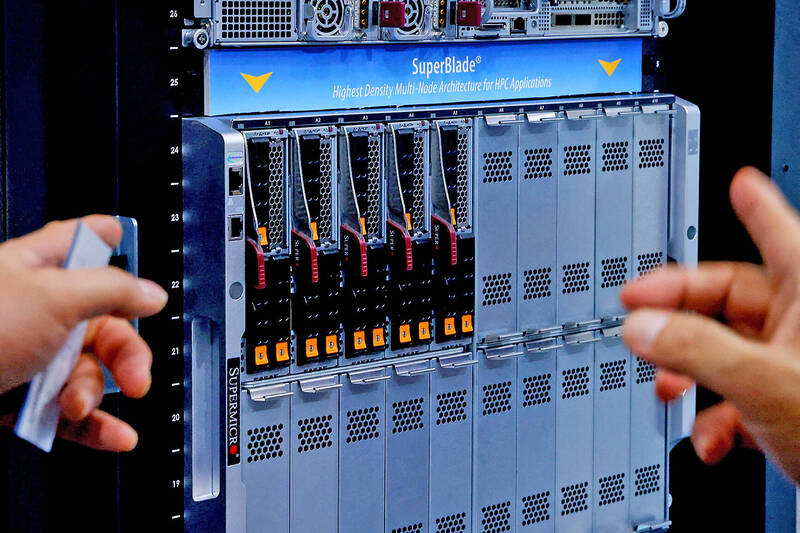
People point at a server on display at Super Micro Computer booth at Computex Taipei, on May 30, 2023. Photo: Ann Wang, Reuters
/ Bloomberg
Prosecutors yesterday said they are seeking to detain three people for forging documents to export Nvidia Corp artificial intelligence (AI) chips to China, in Taiwan’s first crackdown on semiconductor smuggling.
The trio is accused of making fraudulent declarations about sales of AI servers manufactured by US-headquartered Super Micro Computer Inc so that they could ship them to China, Hong Kong and Macau, in contravention of US trade rules.
Super Micro assembles AI chips from the likes of Nvidia into systems that are installed in data centers, and used to train and run models such as OpenAI’s ChatGPT.
Washington has restricted sales of the hardware to China since 2022.
The defendants “fully knew” that sales of the servers are “strictly regulated” by the US, the Keelung District Prosecutors’ Office said.
They “conspired to purchase the servers in Taiwan and export them using fraudulent documentation. They are consequently suspected of offenses including forgery of documents under the Criminal Code,” it said.
The office executed search warrants at 12 locations on Wednesday, including the defendants’ residences, the office said, adding that the trio, along with related witnesses, were apprehended and interviewed.
Super Micro’s servers are also the subject of the biggest chip smuggling prosecution in the US, where authorities arrested the firm’s cofounder — who has pled not guilty — for allegedly diverting billions of dollars worth of Nvidia chips to China.
That case reverberated from Silicon Valley to Southeast Asia, a sign that Washington is getting serious about addressing chip smuggling.
The challenge is industrywide. Hardware made by companies including Dell Technologies Inc and Hewlett Packard Enterprise Co has also appeared in alleged illicit chip trade rings detailed by prosecutors in the US and Singapore.
At no point have authorities publicly accused the various server makers of wrongdoing across the cases, of which there are now at least seven, including the Taiwan one.
The crackdown marks a significant step for Taipei, which for years stood on the sidelines of AI chip export debates.
Under President William Lai (賴清德), Taiwan has been increasingly assertive in protecting its technological edge, including by prosecuting trade secret leakage and imposing unprecedented export restrictions on two major Chinese chip champions.
Lai also promised last year to address unspecified US concerns regarding export controls, which have been Washington’s primary tool for constraining China’s AI ambitions.
The move does not mean that Taiwan is matching US curbs on processors from Nvidia and Advanced Micro Devices Inc.
The US’ rules require companies to seek Washington’s permission for virtually all AI chip exports to China, and Taipei — like other Asian capitals — has long been reluctant to take such an aggressive step.
新聞來源:TAIPEI TIMES