離開
離開 進入
進入《TAIPEI TIMES》 Blocking budget harms Taiwanese, President Lai says
2026/01/01 03:00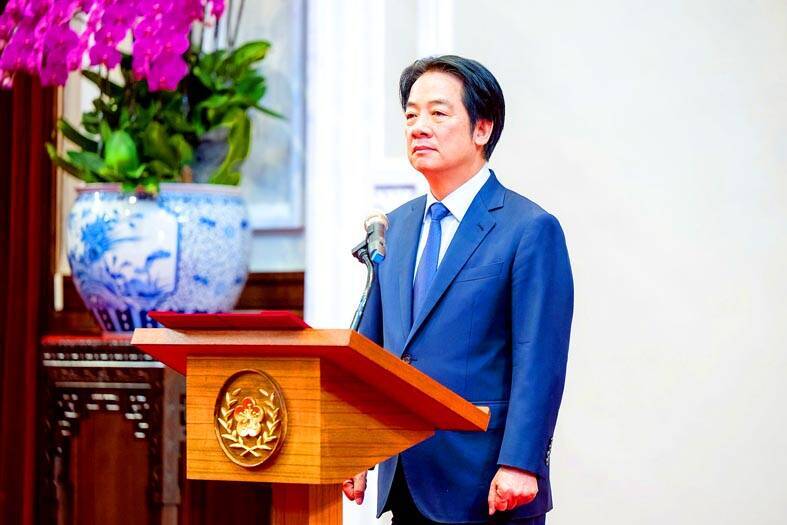
President William Lai is pictured at a ceremony for military officers at the Presidential Office in Taipei yesterday. Photo courtesy of the Presidential Office
By Jonathan Chin / Staff writer, with CNA
The legislature’s refusal to pass the Executive Yuan’s general budget has prevented the enactment of key bills that would benefit Taiwanese, President William Lai (賴清德) said yesterday.
Writing in a Facebook post wishing people a happy new year, Lai urged the legislature to pass the budget, citing livelihood policy allotments that have been delayed, including the Long-Term Care 3.0 program, investments in artificial intelligence, minimum wage increases and welfare program expansions.
“I thank Premier Cho Jung-tai (卓榮泰) and the Cabinet for their hard work in preparing for the new year, but note that the Legislative Yuan has yet to approve the central government’s general budget for the 2026 fiscal year,” Lai said.
“We hope the legislature would complete the review of the budget posthaste to enable the timely implementation of livelihood policies,” he said.
Taiwan has bravely faced the challenges of the past year with the spirit of solidarity and courage, which would see the nation through the upcoming year, on its quest to forge a more just, harmonious and sustainable society, he said.
The Cabinet measures delayed by the legislature’s refusal to pass the budget include broadening cancer screenings, subsidies for medium and low-income families, and incentives for bolstering birthrates.
In his own new year post, Cho urged lawmakers to cooperate with the Lai administration.
He said that deadlock in the legislature has compromised large swathes of reforms aimed at helping Taiwanese.
The Cabinet’s new year’s wish is for greater collaboration between the legislative and executive branches to usher in a Taiwanese government that cares for the well-being of Taiwanese and puts national interests first, he said.
The Executive Yuan last week said that the legislative logjam has jeopardized funds for policies, including incentives for enterprises to adopt more flexible parental leave policies, social housing programs for young couples and benefits for having children.
They also include funding to incentivize businesses to raise wages in exchange for higher migrant laborer quotas and domestic tourism stimuluses, it said.
新聞來源:TAIPEI TIMES