離開
 進入
《TAIPEI TIMES》 Align director, wife charged over suspicious chips
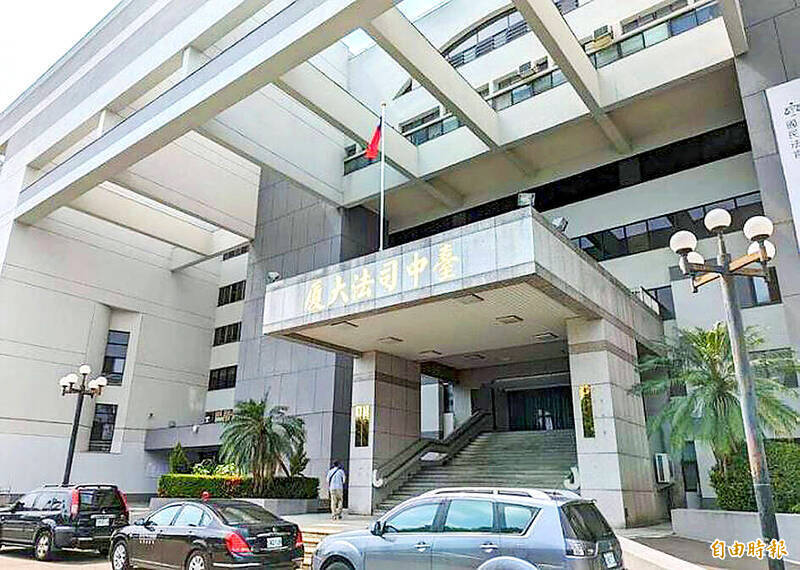
The entrance to the Taichung District Court is pictured in an undated photograph. Photo: Chang Jui-chen, Taipei Times
By Hsu Yung-ching, Lo Tien-pin and Fion Khan / Staff reporters, with staff writer
The Taichung District Prosecutors’ Office yesterday indicted Align Corp (亞拓科技) director Tu Ta-sen (杜大森) and his wife on national security charges for allegedly using Chinese-made chips in military drones.
Prosecutors transferred the suspects to the Taichung District Court, seeking a minimum of five years in prison for the duo.
Taichung prosecutors last month searched locations connected to the company and questioned six people, including Tu and his wife, they said.
The raid came after the military discovered chips with the letters “CN” inside drones.
The military said its procurement contracts explicitly prohibit the use of products from China, Hong Kong and Macau.
Prosecutors said they found the same issue in another batch of drones purchased by the army.
The company is suspected of using circuit boards manufactured by Chinese companies in four military drone procurement contracts, and misrepresenting their country of origin, they said.
Tu and his wife, who were ordered detained and held incommunicado last month, were indicted on contraventions of the National Security Act (國家安全法), document forgery and fraud, prosecutors said.
Align Corp, founded in 1984, is headquartered in Taichung’s Fengyuan District (豐原), the company’s Web site says.
The company has long secured government contracts to supply drones to the military, as well as police and fire departments.
The Changhua County Police Department, which established a drone unit in June, purchased two M490 and nine M3 drones from the company.
In related developments, the National Chungshan Institute of Science and Technology yesterday said it found 10 domestic drone suppliers suspected of using Chinese-made components.
The suppliers have been instructed to replace the components with alternatives that are not made in China, the institute said.
In light of repeated incidents of drone suppliers mixing Chinese-made parts into deliveries, the institute had required suppliers to submit samples for verification and undergo production process inspections to support future mass-production programs.
If components suspected of being Chinese-made are found and their origins cannot be verified, manufacturers would be required to replace them immediately or revise their designs, it said.
Companies that fail to cooperate with sample submissions or make the required improvements would be excluded from the institute’s supply chain, and government agencies would be notified as a precaution, the institute said.
The inspections would help establish a trusted supply chain and are not intended to deliberately exclude any particular company, it added.
The inspection followed a series of recent security scandals involving domestically produced military drones.
In one case, a manufacturer was found to have used Chinese-made chips and flight control boards in drones supplied under an army procurement contract.
In another case, investigators found that a company had installed Chinese-made chips in training drones.
The heads of the two companies have been detained.
Acknowledging the inspection loopholes in small-scale procurement cases during a recent legislative session, Minister of National Defense Wellington Koo (顧立雄) said he has ordered the military to conduct a comprehensive review regarding the issue.
While large-scale procurement projects had not encountered such problems, the cases mainly involved small purchases by military units, about two to four drones, he said, adding that manufacturers had been able to exploit the lack of inspections involving the disassembly of delivered drones.
Koo said he has instructed the ministry to tighten inspections, requiring all drones to undergo full disassembly and inspection upon delivery, regardless of whether they are purchased through annual or supplementary budgets, or small-scale procurement contracts.
The military and the institute have adopted different measures for procurement projects at various stages.
For contracts involving deliveries made before 2024, manufacturers have been asked to provide drones of the same model for inspection, with technical personnel disassembling the aircraft and checking the origins of core components individually, they said.
For projects undergoing delivery or preparing for mass production, manufacturers are required to submit samples and allow officials to inspect their production processes, they added.
All drones supplied under future procurement contracts would undergo full disassembly and inspection upon delivery, along with verification of certificates of origin issued by original manufacturers, they said.
新聞來源:TAIPEI TIMES