離開
 進入
《TAIPEI TIMES》Democrats may codify Taiwan pledge
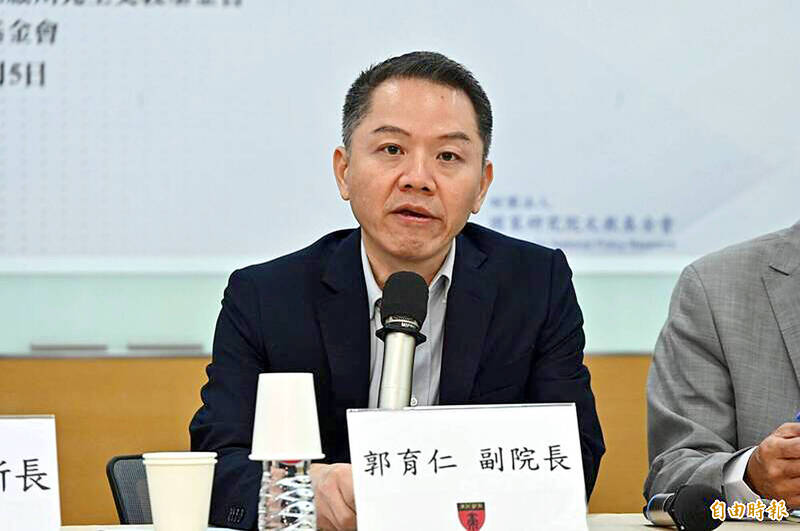
Institute of National Policy Research vice president Kuo Yu-jen. Photo: Tu Chien-jung, Taipei Times
PAVE THE WAY:The Democratic Party could pass Taiwan-friendly measures similar to those of 2018, but Taiwan should not rely on the US for defense, an expert said
By Shelley Shan / Staff reporter
The US Congress could codify the “six assurances” to Taiwan into law following the Democratic Party’s takeover of the US House of Representatives and the Senate in the midterm elections, a political expert said at a panel discussion in Taipei yesterday.
The Democrats’ control of both chambers could pave the way for new legislation supporting Taiwan, similar to measures passed after the party’s major gains in the 2018 midterm elections, National Taiwan Normal University East Asian Studies professor Fan Shih-ping (范世平) said.
Among the measures passed in 2018 was the Taiwan Travel Act, which encourages official visits and exchanges between the US and Taiwan at all levels.
Fan cited German Marshall Fund Indo-Pacific Program managing director Bonnie Glaser as saying that Democrats would be likely to codify the “six assurances” into law if they secured majorities in both chambers.
Raja Krishnamoorthi, the Democratic ranking member of the US House Select Committee on the Strategic Competition Between the US and the Chinese Communist Party, has said that the “assurances” should be formally codified into law rather than remain longstanding policy commitments, Fan said.
Both major US parties have incorporated the “assurances” into their party platforms, with Republicans doing so in 2016 and Democrats in 2024, he said.
Codifying them would make them a cornerstone of US-Taiwan relations, alongside the Taiwan Relations Act, Fan said.
Su Tzu-yun (蘇紫雲), director of the Institute for National Defense and Security Research’s Defense Strategy and Resources Division, said that the new Congress could also reintroduce the Pressure Regulatory Organizations To End Chinese Threats to Taiwan Act (PROTECT Taiwan Act), which seeks to use financial sanctions to deter China from taking military or other coercive actions against Taiwan.
Democratic lawmakers might revive the Taiwan Blue Sky Act of this year, which aims to strengthen Taiwan’s drone industry and integrate it into the US defense supply chain, as well as the Taiwan International Solidarity Act, which seeks to counter China’s use of UN Resolution 2758 to exclude Taiwan from international organizations, Su said.
However, US support should not be a substitute for Taiwan’s own defense efforts, he said, adding that the nation must allocate adequate funding to strengthen its self-defense capabilities.
Taiwan should not expect the international community to shoulder the burden of countering China’s “gray zone” activities, Su said.
He cited criticism of the Coast Guard Administration (CGA) following the escape of Chang Chun-chieh (張俊傑) a former aide for independent Legislator May Chin (高金素梅) who was charged with corruption and allegedly fled Taiwan after jumping bail in a corruption and national security case.
However, the CGA’s annual budget was about NT$28.7 billion (US$873 million), equivalent to only 0.07 percent of GDP and substantially less than the budgets of coast guard authorities in Japan and South Korea, Su said.
Although Taiwan has significantly increased its defense spending in the past few years, it needs to do more to counter “gray zone” harassment and strengthen maritime defense to remain a trusted partner for US lawmakers across party lines, he said.
Taiwan’s trade surplus with the US, which was US$150 billion last year, is also expected to be an issue when the new Congress convenes, he added.
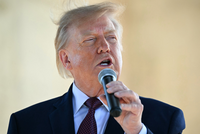
Foundation on Asia-Pacific Peace Studies executive director Tung Li-wen (董立文) said US President Donald Trump could seek to demonstrate achievements in foreign affairs and national defense following the Republican Party’s losses.
Some Chinese think tanks have suggested that Trump might accelerate arms sales to Taiwan as Democrats take control of both chambers of Congress, he said.
Institute of National Policy Research vice president Kuo Yu-jen (郭育仁) said the Republican Party was likely to undergo a leadership reshuffle following the elections.
Meanwhile, Taiwan should move quickly to establish relationships with newly elected Democratic lawmakers and senators, some of whom might have political backgrounds and priorities different from those of established party figures, Kuo said.
A series of diplomatic meetings scheduled this month, including the ASEAN summit, the Quad, a trilateral summit among the US, Japan and South Korea, and a meeting between Trump and Chinese President Xi Jinping (習近平) on the sidelines of the APEC summit, would provide an early indication of how Trump plans to adjust his foreign policy following the midterms setback, he said.
The Six Assurances, first conveyed to Taiwan in 1982, include US commitments not to set a date for ending arms sales to Taiwan, consult Beijing before making arms sales, or mediate between Taipei and Beijing. Washington also pledged not to alter its position on Taiwan’s sovereignty, pressure Taiwan into negotiations with China or revise the Taiwan Relations Act.
新聞來源:TAIPEI TIMES
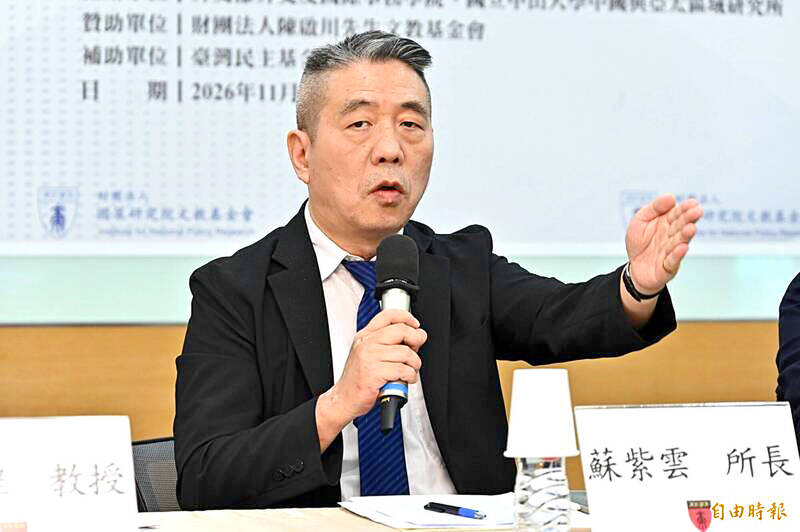
Su Tzu-yun, director of the Institute for National Defense and Security Research’s Defense Strategy and Resources Division. Photo: Tu Chien-jung, Taipei Times