離開
 進入
《TAIPEI TIMES》 2026 Elections: KMT hopes to mobilize core supporters in run up

Taipei Mayor Chiang Wan-an of the Chinese Nationalist Party (KMT), front, fourth left, speaks at the launch of the campaign headquarters for KMT Taipei city councilor Lee Fang-ju, front, fifth left, in Taipei yesterday. Photo: CNA
By Lin Hsin-han / Staff reporter
The Chinese Nationalist Party (KMT) plans to stick to its strategy of mobilizing its core supporters while reaching out to undecided voters in the run-up to the Nov. 28 elections, KMT deputy secretary-general and head of the party’s Organizational Development Committee Lee Che-hua (李哲華) said.
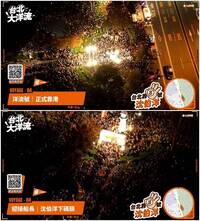
Lee made the remarks in response to media questions about the intensifying local election campaigns, with attention focused on the Taipei mayoral race and whether the “Ocean Wave” (洋流) effect would spread nationwide.
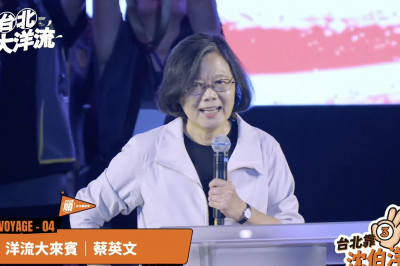
The “Ocean Wave” — a pun on 洋 (“ocean”) in Democratic Progressive Party (DPP) Taipei mayoral candidate Puma Shen’s (沈伯洋) name — refers to the campaign movement built around his Taipei mayoral bid.
The “Ocean Wave” campaign makes effective use of digital tools and online communities to maximize its reach, Lee said, adding that it remains largely a virtual movement, and its impact might not translate into votes.
“Taipei voters are among the most discerning,” he said. “You cannot take a product that people widely considered poor last year, simply repackage it and expect them to suddenly like it. That would be underestimating Taipei residents’ intelligence.”
The “Ocean Wave” effect has significantly skewed polling figures, leading supporters on both sides to interpret the results differently, Lee said, adding that the pan-green camp sees a boost in morale, while the pan-blue camp feels increasingly uneasy.
Such campaign tactics are normal in elections, and when one side has the upper hand, the other does not necessarily need to confront it head-on, he said.
The KMT’s own polling has also found a decline in the willingness of pan-blue voters to reveal their political preferences, resulting in greater polling discrepancies than usual, he said.
This was only a passing phase, he said, adding that the party assesses the overall election situation as stable.
Supporters on both sides are gradually consolidating behind their respective camps, leaving candidates to focus on winning over undecided voters in the final stretch, he said.
Candidates’ policy platforms and visions, as well as voters’ satisfaction with the government’s performance, would all play a role, he said.
With the election approaching, the key would be each party’s strategy in the final stretch, particularly how they mobilize voters and win over undecided and swing voters, he said.
Both parties are pursuing similar strategies, differing mainly in their timing and pace, he said, adding that the KMT would stick to its timetable, holding joint campaign rallies across different regions in the final weeks to mobilize its core supporters and win over centrist and swing voters.
KMT Chairwoman Cheng Li-wun (鄭麗文) said that Changhua County was the party’s toughest electoral battleground among the administrative regions it governs, while Yilan remained a challenge, but the overall outlook was cautiously optimistic.
The situation in Changhua stemmed from disagreements between Changhua County Commissioner Wang Hui-mei (王惠美) and the party’s central leadership over the nomination process, Lee said, adding that he believed Wang would put the party’s broader interests first during the final campaign stretch.
As for the party’s Yilan County commissioner candidate Wu Tsung-hsien (吳宗憲), Lee said although he had not spent long building a political base in Yilan, voters knew Wu has done more to secure resources and benefits for the county than his DPP opponent, Lin Kuo-chang (林國漳), and that “the voters would make their own judgement.”
新聞來源:TAIPEI TIMES