離開
 進入
《TAIPEI TIMES》 Tien Kung III, PAC-3 to anchor defense
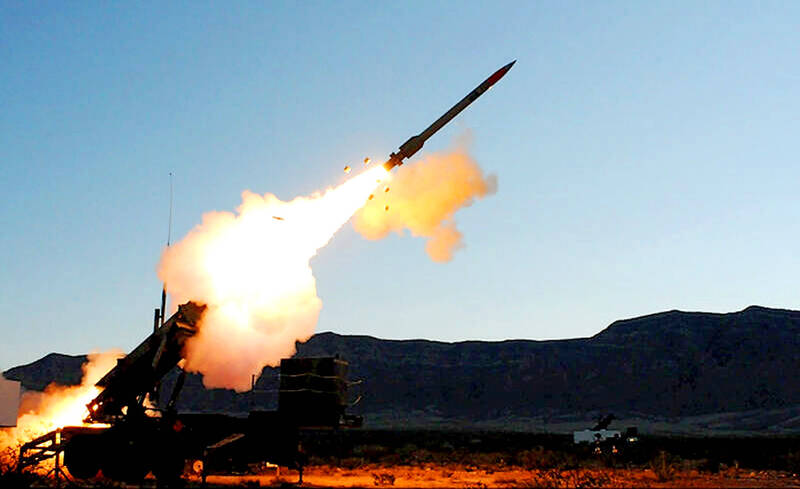
A Patriot Advanced Capability-3 Segment Enhancement missile is launched in an undated photograph. Photo: Screen grab from the Defense Visual Information Distribution System’s Web site
BACKBONE FOR NOW:Taiwan can produce 96 Tien Kung III missiles a year and its defense missile positions can readily accommodate the Tien Kung IV, an official said
By Lo Tien-pin and Jonathan Chin / Staff reporter, with staff writer
Taiwan’s Tien Kung III (天弓三型, “Sky Bow III”) and US-made Patriot Advanced Capability-3 (PAC-3) missiles would remain the backbone of the nation’s air defense in the next three to five years, a defense official said on condition of anonymity.
They made the remarks as they pointed to delayed US arms sales and production constraints affecting the domestically-developed Tien Kung IV (天弓四型, “Sky Bow IV”) missile, which means that the Chiang Kung (強弓, “Strong Bow”) program would not enter service until 2028.
A planned US arms sale to Taiwan worth NT$420 billion (US$12.92 billion) has yet to be announced, delaying key equipment deliveries, including extended-range Patriot PAC-3 missiles and the National Advanced Surface-to-Air Missile System, they said.
Meanwhile, following a year-long budget fight with the legislature, the Ministry of National Defense has opted to fund the Tien Kung IV missile procurement through the government’s annual budget instead of special budgets, the source said.
The ministry has indicated that the missile would provide the key high-altitude interceptor capability for the “T-Dome,” the military’s planned networked air defense matrix for Taiwan proper.
The Tien Kung IV’s vector-thrust maneuverability and high maximum altitude are deemed essential capabilities for Taiwan to counter the advanced ballistic missiles of the Chinese People’s Liberation Army, sources said.
At the current funding levels, the National Chungshan Institute of Science and Technology (NCSIST) can begin delivering Tien Kung IV missiles no earlier than 2028, the official said.
The government plans to bridge the capability gap with a proposed NT$13 billion supplementary budget for materials and assembly lines for the missiles, they said.
Meanwhile, NCSIST has transferred the technology used in more than 50 percent of the missile’s components to the private sector, including parts for active seekers and active electronically scanned arrays, the official said.
Until these efforts bear fruit, the Tien Kung III and PAC-3 missiles must bear the brunt of defending Taiwan’s airspace, the official said.
NCSIST has successfully conducted stress tests on its sprint production capacity for the Tien Kung III missile, they said, adding that Taiwan can produce 96 Tien Kung missiles a year.
The system would be the armed forces’ mainstay interceptor for at least three years, the official said.
Taiwan’s 13 Tien Kung III air defense missile positions, including planned and completed ones, can readily accommodate the Tien Kung IV thanks to commonalities between the two systems’ radar and launch vehicles, they said.
The NCSIST-developed air defense battalion battle management system is capable of integrating Tien Kung III, Tien Kung IV and PAC-3 missiles, which must suffice until the US approves and delivers the anticipated arms package, they added.
新聞來源:TAIPEI TIMES