離開
 進入
《TAIPEI TIMES》 Semiconductor industry’s electricity use hits record
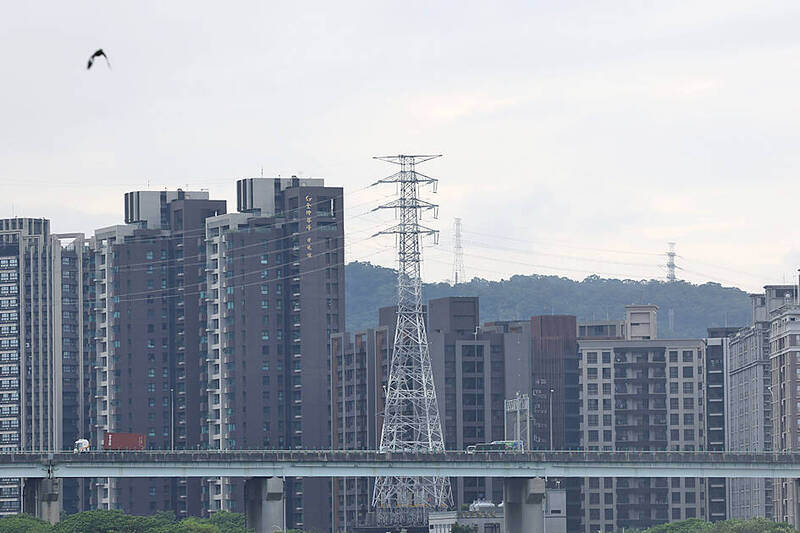
A pylon in New Taipei City’s Wugu District is pictured on Sept. 15. Photo: CNA
/ Staff writer, with CNA
Electricity consumption by Taiwan’s semiconductor industry topped 4.5 terawatt-hours (TWh) for the first time last month, a record driven by stronger-than-expected demand for artificial intelligence (AI), the Taiwan Research Institute (TRI, 台綜院) said yesterday.
As AI technologies develop rapidly and the demand for computing power grows, global demand for cutting-edge chips, advanced packaging and high-performance chips continues to rise, pushing up the industry’s electricity consumption, the institute said in a statement.
Nationwide, electricity consumption by high-voltage and extra-high-voltage industrial users rose 1.76 percent year-on-year last month, while consumption by manufacturers rose 1.96 percent and that by the semiconductor industry rose 11.55 percent — returning to double-digit growth, it said.
The economic monitoring indicator for the power industry remained at “red,” marking robust activity for the 18th consecutive month, the institute said.
Strong production in the high-tech sector has gradually spurred investment demand in other industries, boosting exports, production and corporate investment, and supporting rapid economic growth, which the institute estimates grew 12.6 percent last month.
The TRI forecast that the semiconductor industry’s annual electricity consumption would exceed 50TWh this year, as AI-related business opportunities expand from high-end chips to servers, equipment, materials and key components, benefiting investment and production across the supply chain.
The chemical materials and textile industries continued to show “blue” monitoring readings, signaling contraction, although for different reasons.
The chemical materials industry remained under pressure from global petrochemical overcapacity and a slow recovery in demand, while the textile industry faced weak international end-market demand and price competition, which continued to weigh on orders and production, the institute said.
新聞來源:TAIPEI TIMES