離開
離開 進入
進入《TAIPEI TIMES》MOEA increases forecast for UAV business
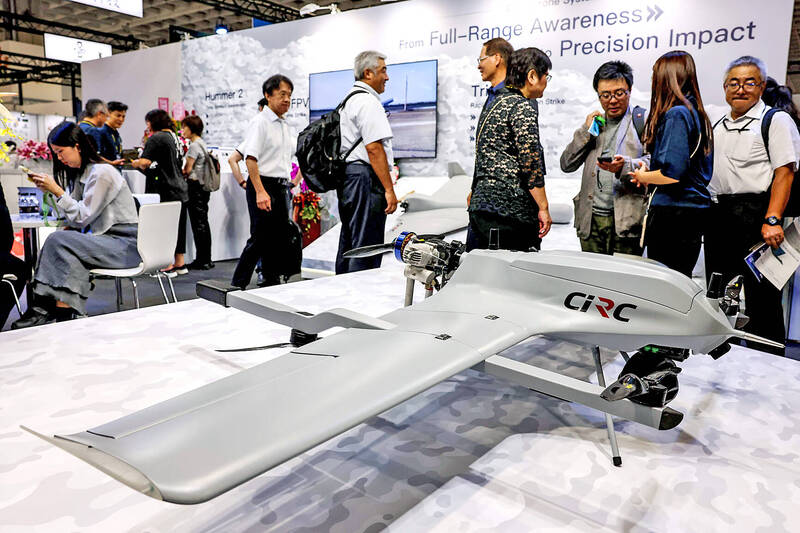
A drone is displayed at the booth of Coretronic intelligent robotics corporation during the Taipei Aerospace and Defense Technology Exhibition in Taipei in 2025. Photo: AFP
AMBITIOUS OUTLOOK:Taiwan aims to increase its manufacturing capability to produce an annually increasing percentage of large, medium and small drones
By Meryl Kao / Staff Reporter
The Ministry of Economic Affairs has increased its forecast of Taiwan’s drone industry output to about NT$50 billion (US$1.57 billion) by 2030 from an earlier estimate of NT$40 billion, thanks to rapidly growing demand.
Drones are emerging as important tools of modern combat and reshaping traditional weapons production, driven by conflicts such as the Russian invasion of Ukraine, which show the changing nature of warfare, Minster of Economic Affairs Kung Ming-hsin (龔明鑫) said in an interview on Tuesday.
Taiwan has advantages in production efficiency and a comprehensive supply chain, while growing international demand for non-China supply chains gives it an opportunity to play a major role among democratic partners, Kung said.
Taiwan has seen rapid growth in exports of drones and related components from 2023 to last year, Kung said.
The government is promoting the drone industry through public sector and defense demand, he said. The ministry is supporting the sector through its uncrewed vehicle industry development program, covering market development, technology, testing sites and regulations, he said.
The Taiwan Excellence Drone International Business Opportunities Alliance has brought together more than 200 domestic companies to connect with overseas markets, Kung said.
Defense demand can provide more stable orders, allowing the industry’s small and medium-sized companies to invest in capacity expansion, he said.
Taiwan needs to expand capabilities in some components to buttress its self-reliance, including thermal imaging, satellite positioning and communications, Kung said.
The ministry encourages local companies to pursue international cooperation and deals, he said.
The first priority is to ensure “non-red” supply chains, while the longer-term goal is for Taiwan to be able to manufacture key components domestically, regardless of whether they are mass-produced, he said.
The government aims to raise domestic manufacturing capability for key drone technologies and components to 90 percent by 2030, from about 70 percent for small drones, 60 percent for medium-sized drones and 30 percent for large drones, Kung said.
Taiwan would continue to broaden its drone supply chain through industry alliances, expanded production capacity, testing sites and international cooperation, he said.
The goal is for Taiwan to play a key role in democratic supply chains and become “the center of Asia’s democratic drone supply chain,” Kung said.
新聞來源:TAIPEI TIMES