離開
離開 進入
進入《TAIPEI TIMES》 Defense ministry seeks to buy anti-drone systems
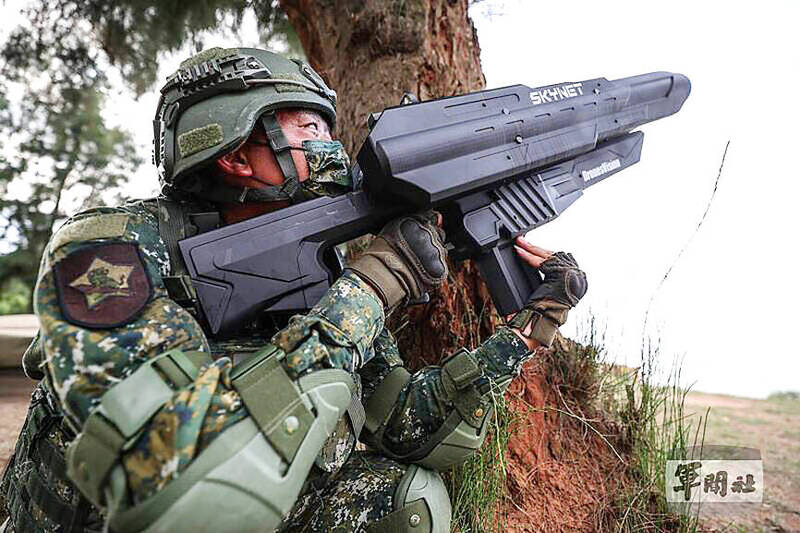
A soldier aims an anti-drone gun in an undated photograph. Photo courtesy of the Military News Agency
MODERN WARFARE: The systems, as specified, would not have enough coverage to fend off drone swarms, and takeover capabilities might be limited, a source said
By Aaron Tu and Jonathan Chin / Staff reporter, with staff writer
The Ministry of National Defense has unveiled a proposed NT$9.67 billion (US$312.4 million) program to buy 635 lightweight anti-uncrewed aerial vehicle (UAV) systems capable of taking over, jamming and GPS data spoofing drones.
The draft proposal to purchase the systems over the next three years has not yet been finalized and must be approved by the legislature.
The systems must be capable of passively detecting more than 10 targets within a 4km zone with an imagery refresh rate of more than once per second and engaging drones operating on frequencies between 433 megahertz and 5.8 gigahertz to a range of 2km, the ministry said.
They must be small enough to be transported on light vehicles including tactical and civilian vehicles, as well as small boats, and require no more than 15 minutes to set up with one or two operators, it said.
The manufacturers must deliver a first batch of 242 systems to the military for testing within 180 days of being notified that it has been awarded a contract, and a second batch of 393 systems within 180 days of passing performance tests, it said.
Supplementary material attached to the notification showed that the program would provide 242 systems to the army, 213 systems to the navy, 72 systems to the air force and 108 systems to the Information, Communications and Electronic Force Command, it said.
Funding would be drawn from annual special budgets designated for next year, 2027 and 2028, the ministry said.
An expert speaking on condition of anonymity criticized aspects of the proposed counter-UAV program, saying the ministry might need to re-examine its suppositions about defensive drone warfare.
As specified, the anti-drone systems would not provide a sufficient detection and engagement range to maintain a continuous area of defense, or the numbers needed to fend off drone swarms, they said.
In addition, deploying “cybertakeover” capabilities and GPS spoofing as a means to defeat hostile UAVs presupposes that friendly operators have already compromised the command signals utilized by enemy drone navigation and guidance systems, the source said.
That means the systems would be ineffective should they encounter hostile drones that used unknown command frequencies or signals, or an encryption system that has not been deciphered, they said.
The military should also ensure that the systems are cost-effective, they said.
Sufficient resources must be directed toward developing algorithms that can rapidly defeat enemy encryption systems and a constantly updated library of enemy UAV signals, if cybertakeover and GPS-spoofing are to remain viable countermeasures against hostile drones, the source said.
新聞來源:TAIPEI TIMES