離開
離開 進入
進入《TAIPEI TIMES》 Public servants found with Chinese IDs, MAC says
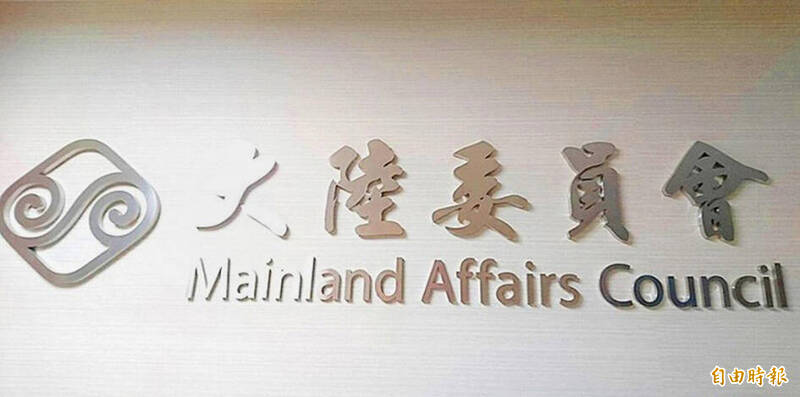
The name and logo of the Mainland Affairs Council at its headquarters in Taipei are pictured in an undated photograph. Photo: Chung Li-hua, Taipei Times
By Chen Yu-fu and Fion Khan / Staff reporter, with staff writer
An investigation of more than 620,000 military personnel, civil servants and public-school teachers identified two people with Chinese citizenship and 102 with Chinese residence permits, the Mainland Affairs Council (MAC) said yesterday.
Of the 627,000 people required to sign an affidavit, more than 626,000, or 99.79 percent, have complied, the council said.
Those found to hold a Chinese ID card or residence permit have since annulled their Chinese citizenship, it added.
The MAC said it has completed its review for the first half of the year and would begin regular inspections on Jan. 1.
Under Article 9-1 of the Act Governing Relations Between the People of the Taiwan Area and the Mainland Area (臺灣地區與大陸地區人民關係條例), Taiwanese who obtain a Chinese household registration or a Chinese passport would be stripped of their citizenship and barred from serving in the military, public service or public schools, the council said last month.
The article also applies to those holding a Chinese ID card or residence permit, it said yesterday.
Recent investigations have found such cases not only among the general public, but also within the ranks of active military personnel, civil servants and teachers, it added.
The Chinese Communist Party (CCP) is using “united front” tactics to undermine the single-citizenship policy long upheld on both sides of the Taiwan Strait, it said.
For example, it has eased regulations for Taiwanese to relocate to China’s Fujian Province, and obtain Chinese citizenship or household registration while still retaining their Taiwanese ID card, designed to blur national identity and encourage Taiwanese to apply for Chinese citizenship, it added.
Regular checks are therefore necessary, as it is unacceptable for people loyal to the CCP to infiltrate public institutions, where they could pose risks to national security and social stability, it said.
The initial phase of systematized inspections would focus only on core personnel in the military, civil service and public schools, it said.
For the military, inspections would apply to volunteer service members, and those who refuse to cooperate with the process would not have their applications accepted, it added.
For civil servants, inspections would cover clerks, special and political appointees, judges, prosecutors, judicial administrative personnel transferred from prosecutors’ offices, as well as contract and temporary employees, guards, technicians, workers, drivers and related staff, it said.
People who refuse to cooperate would be unable to undergo employment reviews, sign or renew contracts, or be deemed to have completed contract procedures, it added.
For teaching staff, inspections would apply to full-time public-school educators covered by the 21 categories defined in the Act Governing the Appointment of Educators (教育人員任用條例) and other related regulations, it said.
Those who are noncompliant would be barred from participating in selection processes, employment or appointments, it added.
新聞來源:TAIPEI TIMES