離開
離開 進入
進入《TAIPEI TIMES》 Upgrade national security education: military expert

Chess pieces are pictured with the flags of Taiwan and China in an arranged photograph taken on April 11, 2023. Photo: Reuters
TACTICS ALERT: Seduction is a common tactic in espionage, so people should be warned about its use alongside warnings about bribes, Liu Te-liang said
By Fang Wei-li and Esme Yeh / Staff reporters
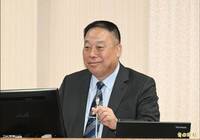
National security education should be enhanced and penalties for treason should be increased to counteract pervasive Chinese infiltration threats, said Liu Te-liang (劉德良), former director-general of the Military Intelligence Bureau.
Up to 60 percent of the 159 cases of Chinese espionage uncovered by the National Security Bureau (NSB) in the past few years involved serving or retired military personnel, Liu wrote in the online Cross-Strait Situation Analysis newsletter (兩岸情勢研析通訊) published by the Democratic Progressive Party’s China Affairs Department.
While the case count reflects the military’s dedication to combating espionage, it also indicates that even more spies might be lurking in government agencies and industry, he wrote.
Chinese “united front” warfare is often disguised as cross-strait exchanges, with Beijing’s agents seeking Taiwanese who they believe would help them, he said.
“United front” tactics and espionage should not be conflated, although they are not entirely distinct, he said.
At least 5,000 Beijing-backed spies had infiltrated Taiwan by 2007, so the number has no doubt risen a lot over the past 18 years, Liu said, adding that people should be alert regardless of what the actual number might be.
Common infiltration channels are criminal enterprises, illegal banking operations, front companies, temples and civic groups, Liu said, citing government reports.
However, social venues are an easily overlooked route, with agents known to use hotels, bars, dance halls, KTV parlors and erotic teahouses to lure Taiwanese into espionage work, he said.
Seduction is a common tactic in international espionage, so the NSB should warn people about its use alongside its warnings about bribes, Liu wrote, citing the example of former army major general Lo Hsien-che (羅賢哲), who was coerced into spying for China with photographs of him engaging in sex.
Education on ways to counter espionage should be stepped up in the military and at government agencies, as well as in broader society, to increase awareness, he said.
Moreover, regulations should be amended to increase the penalties for treason, which should at least be more severe than those for corruption, he said.
The public and media should support national security authorities instead of discouraging them with relentless criticism, he added.
People should establish healthy life and work habits, and reduce unnecessary social activities by staying away from hotspots of spy recruitment, he said.
Anyone involved in national security affairs can be targeted, regardless of their hierarchical level, he added.
Drivers, assistants, office clerks and staff to officials in the core decisionmaking circle are all potential targets of Chinese spies, he wrote.
National security can only be protected by increasing awareness and refining regulations, as China is expanding the scope of its infiltrations from government agencies to critical institutions such as Taiwan Semiconductor Manufacturing Co, Academia Sinica and the Chungshan Institute of Science and Technology, Liu said.
新聞來源:TAIPEI TIMES