離開
離開 進入
進入《TAIPEI TIMES》Military to buy bullet-resistant ceramic plates
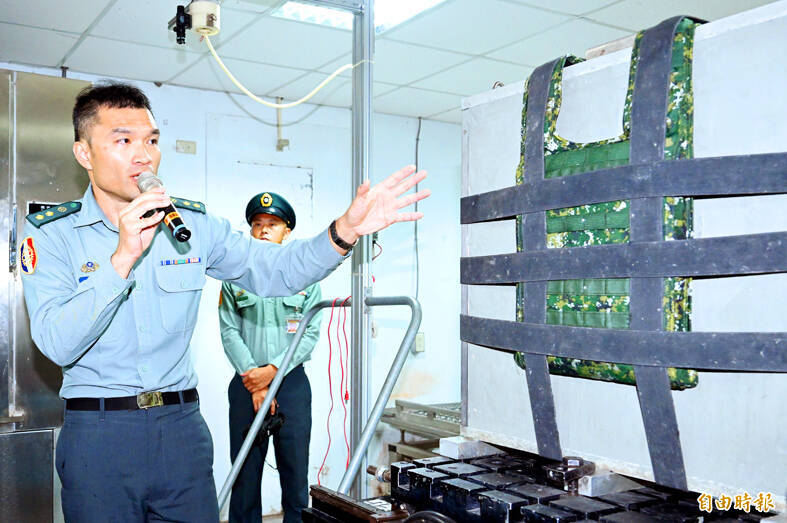
A representative from the Ministry of National Defense’s Armaments Bureau explains the results of a test for body armor bullet resistance on July 19, 2023. Photo: Liao Chen-huei, Taipei Times
BODY ARMOR:The new boron carbide bullet-resistant ceramic plates are capable of protecting against up to 7.62mm armor-piercing ammunition or shrapnel
By Aaron Tu and Lery Hiciano / Staff reporter, with staff writer
The military plans to purchase 48,000 new boron carbide bullet-resistant ceramic plates, the Ministry of National Defense’s latest list of regulated military material showed.
Mass production of the plates is scheduled for between 2028 and 2029, according to the document that was released last week.
The plates are capable of protecting against up to 7.62mm armor-piercing ammunition or shrapnel.
The budget is set at NT$840 million (US$28.08 million) for the 48,000 sets of plates in 2028 and 2029, the document showed, after an initial procurement of 30 units for NT$1.395 million.
The list does not indicate the plates’ protective rating, but the specifications for NIJ IV-level body armor — resisting a .30 caliber M2 armor-piercing round — are similar to that of the new armor.
Details on the protective rating, weight and which branches of the military are to adopt the armor are not yet public knowledge.
The current NIJ III-rated plates in use by the armed forces are designed to stop standard 7.62mm by 51mm NATO ammunition, the ministry said.
Armor plates that entered mass production this year have three layers of ceramic materials and polyethylene fibers, with 60,000 expected to be mass-produced and delivered to the military this year.
To protect against the 5.8mm steel-core rounds used by the Chinese People’s Liberation Army, as well as ordinary 7.62mm bullets, they were developed according to the Enhanced Small Arms Protective Insert specifications used by the US military, the ministry said.
The ministry in February signed a NT$1.6 billion contract to purchase 160,000 ceramic plates.
The ministry’s list of controlled materials includes both the body armor and the research used to develop them.
Boron carbide is among the hardest known materials, and is also lightweight, making it ideal for protective applications.
The export control military use list outlines items subject to export authorization due to their potential applications in national defense. Since 2021, the ministry has released the list annually in accordance with the National Defense Industry Development Act (國防產業發展條例).
Additional reporting by CNA
新聞來源:TAIPEI TIMES