離開
離開 進入
進入《TAIPEI TIMES》 Researchers warn of manipulation of recall information
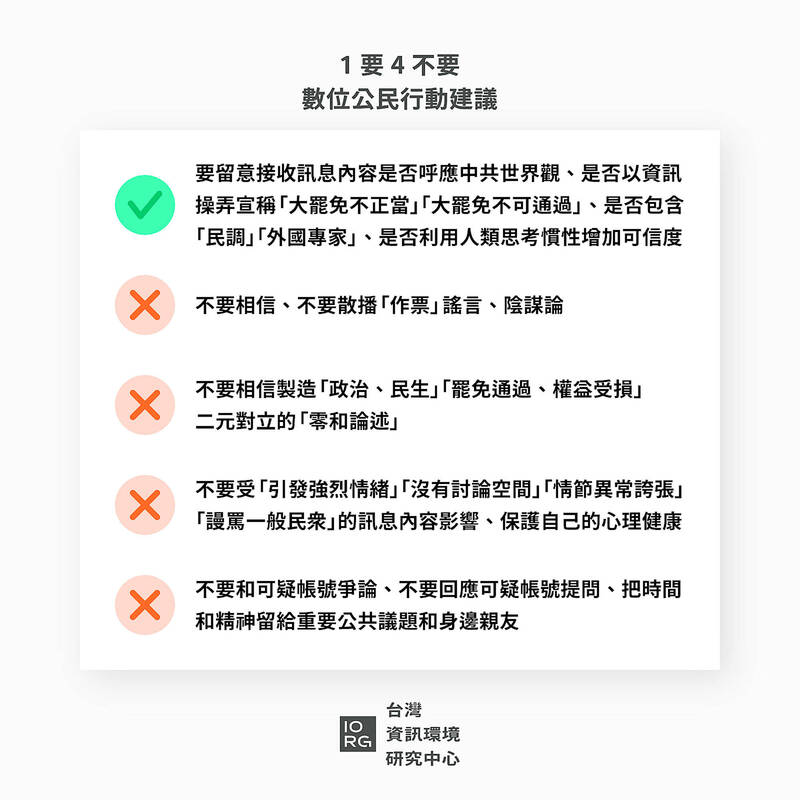
A screen grab from the Web site of the Information Operations Research Group shows warnings about the signs of possible disinformation. Photo: screen grab from the Information Operations Research Group Web site
By Su Yung-yao and Jake Chung / Staff reporter, with staff writer
The public should watch out for manipulation of information about voting in recalls on July 26, the Taiwan Information Environment Research Center said in a report published on Thursday, adding that those who encounter such material should attempt to discern who was being targeted and what message was being conveyed.
When viewing material related to the recall votes, the public should determine whether it aligns with the worldview of the Chinese Communist Party (CCP) by saying that the recall campaigns were unjust or that the votes must not be allowed to succeed, the report said.
People should be on the lookout for phrases such as “polls,” “foreign experts” and “foreign media reports,” and assess whether they are being used manipulatively, it said.
Claims based on polls should be investigated, it said.
The transparency, design philosophy and the framing of questions in polls should be analyzed before ascribing great value to the results of a poll, the report said.
Comments and news clips from foreign academics, experts, and political figures are often used to lend credibility to reports, but their remarks can be over-extrapolated or misinterpreted, it said.
The nationality of the people being quoted can be used to project the illusion that they are speaking on behalf of their country, it said, adding that quotes should always be verified.
The public should not believe any reports or rumors that the Central Election Commission, polling staff or political parties are involved in vote-rigging, as that not only erodes public trust in the authenticity of a vote and the democratic system, but also risks contravening the law, it said.
Binary or “zero sum” rhetoric should be rejected, such as claims that successful recalls would affect everyday life and regional stability, the IORG said.
There would never be a definite causal effect between the outcome of a vote and everyday life or regional stability, while the “zero sum” mentality does not align with real life, it said.
The CCP and its supporters often use cost of living issues and fear of war to belittle Taiwan’s government and the nation’s sovereignty, it said, adding that they accuse the government of focusing on the recalls while ignoring public welfare.
The claim that recalls would lead to war in the Taiwan Strait is also prevalent among such misinformation, the researchers said.
The Threads social media site is a major source of comments that aim to fan emotions and foment arguments, they said, adding that the accounts responsible for such material are likely to be controlled by malicious actors.
The public should research the veracity of content posted online and refrain from responding to accounts that exhibit signs they are stirring, which would save time and protect personal information, they added.
PrintMail
新聞來源:TAIPEI TIMES