離開
離開 進入
進入《TAIPEI TIMES》 Explosives used in Tamsui defense drill
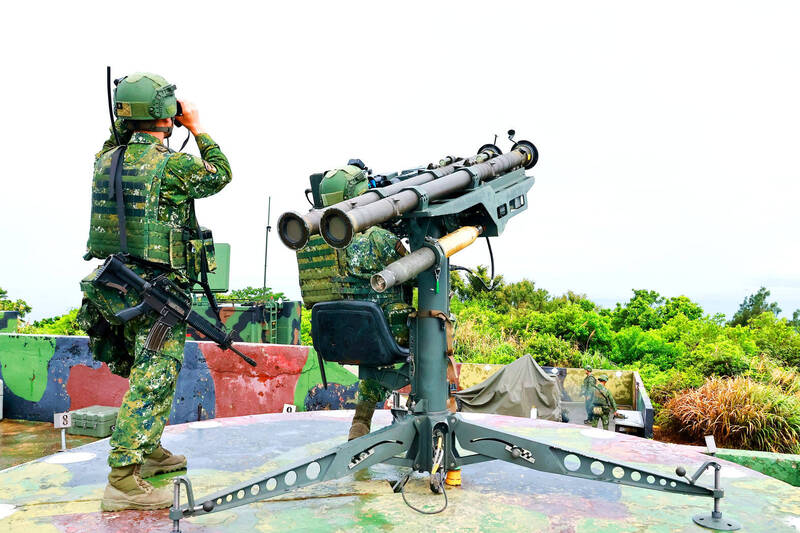
A soldier uses binoculars to look for flying objects during the annual Han Kuang military exercise in Lienchiang County yesterday. Photo courtesy of ROC Army Matsu Defense Command
DEFENSIVE MANEUVER: Artillery, mines and obstacles would be used to prevent PLA forces from moving into Taiwan proper from rivers, the defense ministry said
By Lo Tien-pin, Fang Wei-li, and Jonathan Chin / Staff reporters, with staff writer
Army combat engineers yesterday deployed anti-landing obstacles and remotely detonated explosives during a simulated defense of the Tamsui River as part of this year’s Han Kuang military exercise.
Yesterday was the fourth day of the exercise, during which the military transitioned from countering “gray zone” incursions to full-scale warfare, according to the military’s drill schedule.
The unprecedented use of live explosives in the access denial drills reflected the 41st Han Kuang exercise’s emphasis on realism and operationally relevant warfighting skills, Association of Strategic Foresight analyst Chieh Chung (揭仲) said from the sidelines of the event.
This year’s iteration of the annual exercise — the largest yet in the drill’s history — envisions the Taiwanese armed forces deploying for defensive operations following intelligence assessments showing a significant military build-up on China’s southeastern coastline, he said.
The army built four defensive belts along the river to counter high-speed surface vessels and uncrewed underwater vehicles, Chieh said.
During the drills, Tamsui, a causeway leading to Taipei, was a key defensive zone for the army as it sought to prevent a Chinese People’s Liberation Army (PLA) advance, he said.
Should the PLA gain control of the riverbanks and Tamsui itself, the Chinese troops would be able to build a salient point to the nation’s strategic center of gravity, and would be able to link up with a potential main landing force in New Taipei City’s Bali District (八里), he said.
The use of live explosives in the exercise would help Taiwanese forces assigned to river defense ascertain the effectiveness of their operational plans, Chieh said.
This included the appropriate number, width and depth of defensive lines, the density of obstacles and the correct amount of explosives needed to destroy or disable enemy vessels, he added.
The Tamsui River holds key strategic value for Taiwan’s defense, as the mouth of the river is less than an hour’s drive to the Presidential Office Building in Taipei, a defense official said on condition of anonymity.
The PLA is cognizant of the strategic potential of amphibious operations and has heavily invested in hovercraft and other capabilities to enable rapid and powerful assaults on beachheads and riverfronts, they said.
Underscoring the importance of controlling Tamsui, the 1st Combined Arms Battalion of the Army Guandu Area Command is permanently assigned to defend the area at all hours, they said.
In the event of war, Taiwanese ground forces would stage a defense, utilizing artillery, mines and obstacles to prevent PLA landing forces from moving into Taiwan proper via its major rivers, the Ministry of National Defense said in a report to the Legislative Yuan.
The defense would incorporate detonation cords and gasoline barrels to bar the way of Chinese watercraft while subjecting them to direct and indirect fire from strongpoints alongside the river bank, it said.
Separately, a delegation of US military advisers headed by former US Indo-Pacific Command commander and retired army general Charles Flynn visited the Tamsui area to observe the drills, an official said on condition of anonymity.
The advisers gave “specific and constructive” recommendations, including suggesting that Taiwanese forces adjust their priorities when reacting to changing operational situations, and rectifying weaknesses in their defense, they said.
In May last year, retired US Navy rear admiral Mark Montgomery told the US House Select Committee on China that the Pentagon was too slow in helping Taiwanese troops prepare for a potential conflict with China.
US military assistance is indispensable for molding a Taiwanese military truly capable of defending itself against aggression, he said at the time, adding that providing the nation with Harpoon missiles would make no difference if the troops do not know how to operate the weapons.
Flynn at the same hearing said that China plans to make Taiwan submit without fighting a war, but the US could no longer afford to ignore the threat posed by the PLA’s air, sea and land capabilities.
新聞來源:TAIPEI TIMES
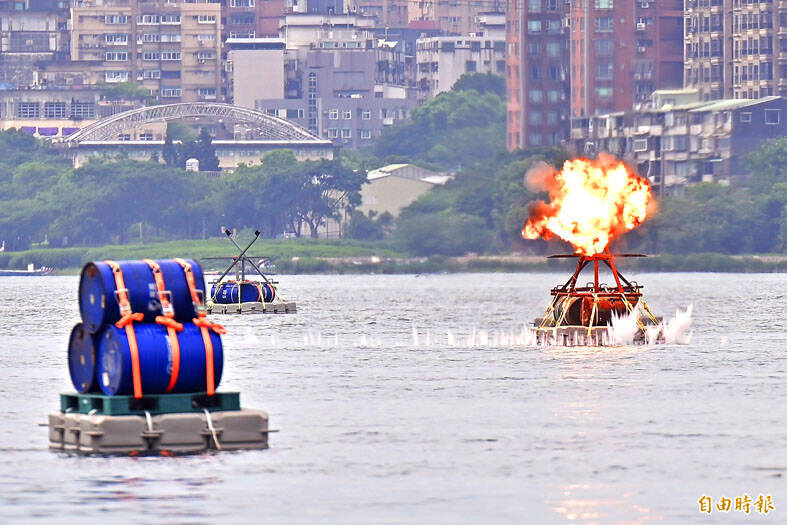
The army’s 53rd Engineer Group set up obstacles on the river and detonate explosives during the annual Han Kuang military exercise in New Taipei City yesterday. Photo: Tu Chien-jung, Taipei Times
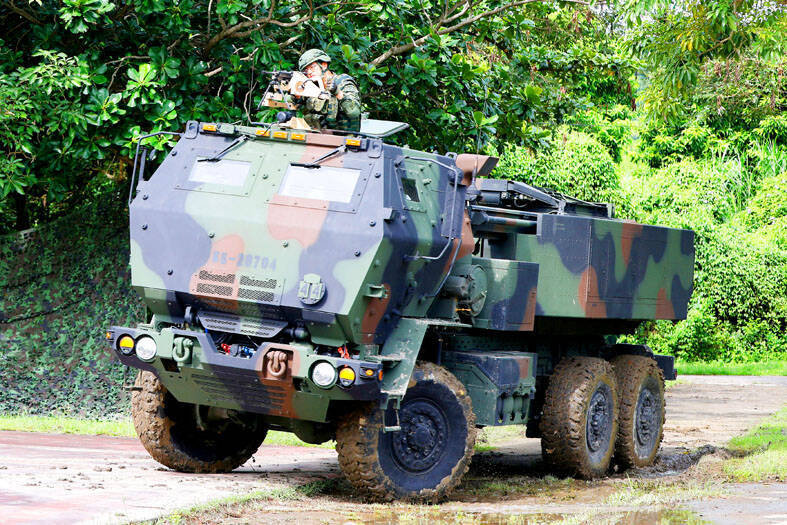
A High Mobility Artillery Rocket System is displayed at a park during the Han Kuang military exercise in Taichung yesterday. Photo: Ann Wang, Reuters